

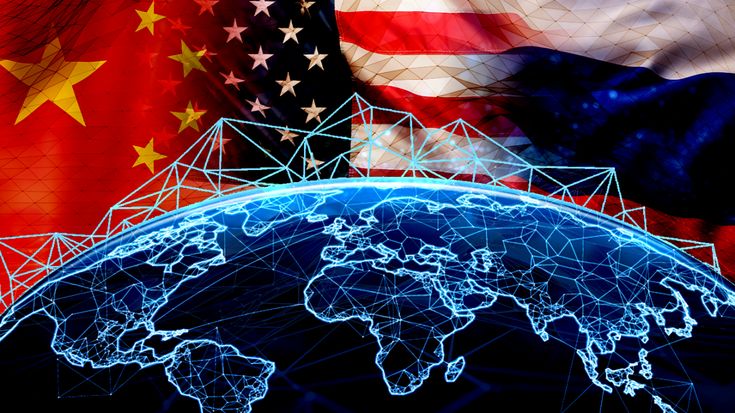
In recent years, the world has witnessed a significant escalation in global tensions, presenting unprecedented challenges to international relations. From trade disputes to military confrontations, various geopolitical issues have emerged, reshaping alliances and prompting nations to reassess their foreign policies. This article delves into the critical developments shaping international relations today, analyzing their implications for world order.
The U.S.-China Rivalry
The rivalry between the United States and China has become one of the defining features of modern international relations. Growing economic competition, technological advancements, and military posturing have escalated tensions between the two superpowers. The South China Sea has become a flashpoint, with China’s assertive territorial claims clashing with U.S. naval operations aimed at ensuring freedom of navigation.
-
- Trade Wars: The imposition of tariffs and trade restrictions has strained economic ties, prompting fears of a prolonged trade war.
-
- Technological Competition: Both nations are vying for supremacy in emerging technologies, particularly in artificial intelligence and telecommunications.
-
- Military Engagements: Increased military drills and arms buildups in the Asia-Pacific region highlight the potential for conflict.
Russia’s Expansionism
Russia’s geopolitical ambitions, particularly in Eastern Europe and the Caucasus, have raised alarms among Western nations. The annexation of Crimea in 2014 marked a turning point, prompting the United States and European Union to impose sanctions. Relations between NATO and Russia have deteriorated, with increased military presence along Eastern European borders.
-
- Ukraine Conflict: Ongoing hostilities in Eastern Ukraine underscore the fragile state of security in the region, causing international concern over potential escalation.
-
- Energy Politics: Europe’s reliance on Russian gas has complicated responses to Russian aggression, necessitating a reevaluation of energy security strategies.
-
- Military Alliances: Russia’s partnerships with countries like Belarus, Syria, and Iran exemplify its strategy to counter Western influence.
Middles Eastern Turmoil
The Middle East remains a volatile region, shaped by long-standing conflicts and emerging threats. The Syrian civil war has drawn in international powers, further complicating the landscape. Iran’s nuclear ambitions and regional influence also pose a significant challenge to stability.
-
- Iran-Israel Tensions: Escalating hostilities between Iran and Israel, particularly concerning Iran’s nuclear program, threaten regional peace.
-
- Proxy Conflicts: Various proxy wars, involving state and non-state actors, fuel ongoing violence and humanitarian crises.
-
- The Abraham Accords: While some countries have normalized relations with Israel, the broader Arab-Israeli conflict remains unresolved, perpetuating tension.
Diplomatic Efforts Amidst Global Crisis
Despite rising tensions, diplomatic efforts continue to seek resolutions. Various international organizations, including the United Nations, are actively engaged in mediating conflicts and fostering dialogue. Countries are increasingly pursuing multilateral approaches to address global issues, from climate change to security.
-
- Climate Change: The urgency of climate action has brought nations together, while also exposing fault lines in international cooperation.
-
- Nuclear Disarmament: Ongoing discussions regarding nuclear non-proliferation highlight the need for collective action against threats.
-
- Humanitarian Initiatives: Global crises have mobilized humanitarian responses, emphasizing the role of NGOs and international aid organizations.
The Role of Technology in Geopolitics
Technological advancements are reshaping international relations, enabling new avenues for both collaboration and conflict. Cybersecurity threats, information warfare, and the rise of social media have profound implications for how nations interact and influence public opinion.
-
- Cyber Warfare: State-sponsored cyberattacks have emerged as a new front in geopolitical tensions, with potential ramifications for national security.
-
- Social Media’s Impact: The use of social media platforms in political campaigns and misinformation campaigns has transformed the landscape of diplomacy.
-
- AI Ethics and Regulation: As countries seek to develop artificial intelligence, discussions surrounding ethical considerations and regulations are becoming critical.
The Future of International Relations
The current landscape of international relations is marked by uncertainty and complexity. As nations navigate shifting alliances and confront emergent threats, cooperation and dialogue will be essential to prevent further escalation. Understanding the underlying motivations and strategies of different actors will be crucial in developing effective solutions.
As we move forward, it is imperative for global leaders to prioritize diplomacy and constructive engagement. Only through a collaborative approach can we hope to address the pressing challenges facing our world today. The stakes are high, and the outcomes will shape the geopolitical landscape for years to come.